



Russell Brand
Spirituality/Belief • Culture • Lifestyle
Russell Brand Awakened Wonders
Interested? Want to learn more about the community?

Hello RUSSELL Love to you

and My Locals Family

God bless you all.

I wrote this Poem because Today I did some Soul Healing in front of the building Of the Court room where My Day in court with My Dad Happened here is the Photo of the court bUilding I took today

My book of poems for Russell
A beautiful soft hearted wounded artist

My dead Dad diaries

Poem 1.  Sitting With the younger Troubled Daddy's Girl I was At 21 years old and the Holy Son at the Physical Location of  where the lawful place My Bond with my earth Dad  died.

My Dead Dad Diaires. I do Strongly Believe  in The Powerful ability of Being Physically Present At a Place Where a Trauma Happened In the Past So on my Ongoing life Path of Trying To  do The Long Term Soul Search Surgery We call unpatching the Devastated Daddy's Girl Heart within Me that was committed to be The Daddy's Girl that you could Accept and Love Dad Crumbled Into a Million Traumatizing Pieces As Living Under your Shetler Dad Was A Daily  internal Battle for me  of Horror Because Of Waking up every day feeling The Fear of  steeping on the Wrong Step or Saying the wrong Word to trigger the Realistic bomb of My Dad's Anger. My Dead Dad Diaries when I was A Young Spring chicken of 21 who was in a Legal Warfare with the Dad that I Left everything I knew to be with. And where I Had to  settle Our Dispute of What it came to in the end Of $320 dollars of what you called rent at The temple where the law is Preached and Practised and it was the real Life Bomb that killed the Small thread of Our Dad and daughter Bond That was left in the aftermath of me leaving Your Behind Closed Doors Hell Dad.  It was God's Will that I had friends Shine the Golden light of hope that I could cling Too in my Time of violence In my home season Of My Life that was My Life Raft then. Now in 2026  when I have Been Walking In the beautiful valley of Healing so today I sat In front of the Physical Building of the Lawful temple Where I Had to Stand Up for Legal Protection Against my Dad and I Did Have a Small Rainfall falling from My Eyes. As I held the Holy Cross in My Hand  with My Eyes Locked Onto the court Building Where  I became a Survivor and the Bond with my Dad Died.  There Was a intense Wave Of Emotion Overcoming Me because I Have Not Wanted to Dig Into this Fresh But Old Wound of my Dad's court Day with Me That was also Tragically on my Dad's Birthday And I have Wrestled With the fact that the story and Connectedness I had with My Dad is Now forever Unbroken And forever incomplete as I never Got to Wrap my Arms around you Dad I. A Heartfelt embrace before The  Holy God called you back Home. I  prayed that the Holy Trinity Would Be There in the Past When I was In that Legal fire with my Dad.  Sitting with the  younger  Troubled Daddy's Girl I was  at 21 years Old and the Holy son at the Physical Location of Where the Lawful  place my Bond where  my Earth Dad died.  I  also  sent   up a Holy Request for the  Heavenly Father to Grant My earth Dad Mercy but also Be his Holy and One True Judge of His  physical Mistreatment of Me and declining my Offer to Create Peace With Me and My Dad.  I sang  a Song From that is the Theme for The Prisoner tv Show My Dad Loved as I was sitting In front of the Building That is the Lawful temple Where I Attempted to share My story But the Judge did Cut my Throat Off by Telling Me Because my Body doesn't Match What ever Image Society says is Normal that It Would Mentally Damage Me More to Not speak But the Judge was Wrong. But Now As a 30 year Old Dad I have my voice Back After Trecking The Long Life Path of Finding It Again After the Wounded beautiful Soft Hearted Artist helped me Reclaim my voice after Teaching Me That Iam Worthy of Respect and being Heard. My Dead Dad Diaries. Today I Tried my best to Surrender The Court trauma at the foot of The Holy sons Cross. I sang the Song By Kid Rock about Worshipping The holy Son While you can and spending Time With Those you love while you can. I did Feel the Holy Son presence with Me Today as I did this Soul helaing surgery. My Dead Dad Diaries. Sitting with the Younger Troubled Daddy's Girl I was at 21 years old and the Holy son at the Physical Location of Where the Lawful place my Bond with my Earth Dad Died.

post photo preview
Interested? Want to learn more about the community?
What else you may like…
Videos
Posts
Articles
BREAK BREAD EP. 9 GUEST IS...

BRANDON LAKE! 🙌

We'll be going LIVE, right here on Locals TOMORROW at 8:30am CT | 9:30am ET!

That being said, one of the perks of you lot being Awakened Wonders is the ability to send in questions for me and my guests to answer. Hit the link below to ask Jack and I anything about Christianity!

SUBMIT QUESTIONS HERE: https://forms.gle/xK26o4invtfPo73L8

Much love!

00:00:31
The Book of Acts is what made me become a Christian.

I love the book of Acts -- what about you lot?

00:02:00
Cold plunging for Jesus
00:00:42

Ineffable effigies

Me resending all my tweets because girls always have a second chance to make a first impression

5th entry on reading Russell's book.

As I continue to read Russell’s book, I as usual bounce around thoughts in my mind, relating what he is saying to my own experiences.

He mentions Moses going to the dark place to meet with God. The dark place is assessed to be a protective layer between the radiance of God, to humanity. Frankly, I had not dissected the words myself enough about going to a dark place, thus consulted Microsoft co-pilot about-in my thoughts it was-what? I don’t remember him going to a dark place to meet God. This dissemination came in layers of remembering listening and reading books on near death experiences, where some of the people remember entering a dark void, with light only visible in a distance. Another layer that occurred was my own experience of having my wisdom teeth extracted, When I breathed in the nitrous oxide, I found myself outside my body, in a dark place with a pin hole of light in the distance. Two female appearing beings were there, and told me it was ...

post photo preview
Noam Chomsky "10 strategies of manipulation" by the media
One to Read

"10 strategies of manipulation" by the media 

Renowned critic and always MIT linguist Noam Chomsky, one of the classic voices of intellectual dissent in the last decade, has compiled a list of the ten most common and effective strategies resorted to by the agendas “hidden” to establish a manipulation of the population through the media.

Historically the media have proven highly efficient to mold public opinion. Thanks to the media paraphernalia and propaganda, have been created or destroyed social movements, justified wars, tempered financial crisis, spurred on some other ideological currents, and even given the phenomenon of media as producers of reality within the collective psyche.

But how to detect the most common strategies for understanding these psychosocial tools which, surely, we participate? Fortunately Chomsky has been given the task of synthesizing and expose these practices, some more obvious and more sophisticated, but apparently all equally effective and, from a certain point of view, demeaning. Encourage stupidity, promote a sense of guilt, promote distraction, or construct artificial problems and then magically, solve them, are just some of these tactics.

1. The strategy of distraction
The primary element of social control is the strategy of distraction which is to divert public attention from important issues and changes determined by the political and economic elites, by the technique of flood or flooding continuous distractions and insignificant information. distraction strategy is also essential to prevent the public interest in the essential knowledge in the area of the science, economics, psychology, neurobiology and cybernetics. “Maintaining public attention diverted away from the real social problems, captivated by matters of no real importance. Keep the public busy, busy, busy, no time to think, back to farm and other animals (quote from text Silent Weapons for Quiet War ).”

2. Create problems, then offer solutions
This method is also called “problem -reaction- solution. “It creates a problem, a “situation” referred to cause some reaction in the audience, so this is the principal of the steps that you want to accept. For example: let it unfold and intensify urban violence, or arrange for bloody attacks in order that the public is the applicant’s security laws and policies to the detriment of freedom. Or: create an economic crisis to accept as a necessary evil retreat of social rights and the dismantling of public services.

3. The gradual strategy
acceptance to an unacceptable degree, just apply it gradually, dropper, for consecutive years. That is how they radically new socioeconomic conditions ( neoliberalism ) were imposed during the 1980s and 1990s: the minimal state, privatization, precariousness, flexibility, massive unemployment, wages, and do not guarantee a decent income, so many changes that have brought about a revolution if they had been applied once.

4. The strategy of deferring
Another way to accept an unpopular decision is to present it as “painful and necessary”, gaining public acceptance, at the time for future application. It is easier to accept that a future sacrifice of immediate slaughter. First, because the effort is not used immediately. Then, because the public, masses, is always the tendency to expect naively that “everything will be better tomorrow” and that the sacrifice required may be avoided. This gives the public more time to get used to the idea of change and accept it with resignation when the time comes.

5. Go to the public as a little child
Most of the advertising to the general public uses speech, argument, people and particularly children’s intonation, often close to the weakness, as if the viewer were a little child or a mentally deficient. The harder one tries to deceive the viewer look, the more it tends to adopt a tone infantilising. Why? “If one goes to a person as if she had the age of 12 years or less, then, because of suggestion, she tends with a certain probability that a response or reaction also devoid of a critical sense as a person 12 years or younger (see Silent Weapons for Quiet War ).”

6. Use the emotional side more than the reflection
Making use of the emotional aspect is a classic technique for causing a short circuit on rational analysis , and finally to the critical sense of the individual. Furthermore, the use of emotional register to open the door to the unconscious for implantation or grafting ideas , desires, fears and anxieties , compulsions, or induce behaviors …

7. Keep the public in ignorance and mediocrity
Making the public incapable of understanding the technologies and methods used to control and enslavement. “The quality of education given to the lower social classes must be the poor and mediocre as possible so that the gap of ignorance it plans among the lower classes and upper classes is and remains impossible to attain for the lower classes (See ‘ Silent Weapons for Quiet War ).”

8. To encourage the public to be complacent with mediocrity
Promote the public to believe that the fact is fashionable to be stupid, vulgar and uneducated…

9. Self-blame Strengthen
To let individual blame for their misfortune, because of the failure of their intelligence, their abilities, or their efforts. So, instead of rebelling against the economic system, the individual autodesvalida and guilt, which creates a depression, one of whose effects is to inhibit its action. And, without action, there is no revolution!

10. Getting to know the individuals better than they know themselves
Over the past 50 years, advances of accelerated science has generated a growing gap between public knowledge and those owned and operated by dominant elites. Thanks to biology, neurobiology and applied psychology, the “system” has enjoyed a sophisticated understanding of human beings, both physically and psychologically. The system has gotten better acquainted with the common man more than he knows himself. This means that, in most cases, the system exerts greater control and great power over individuals, greater than that of individuals about themselves. 
Read full Article
post photo preview
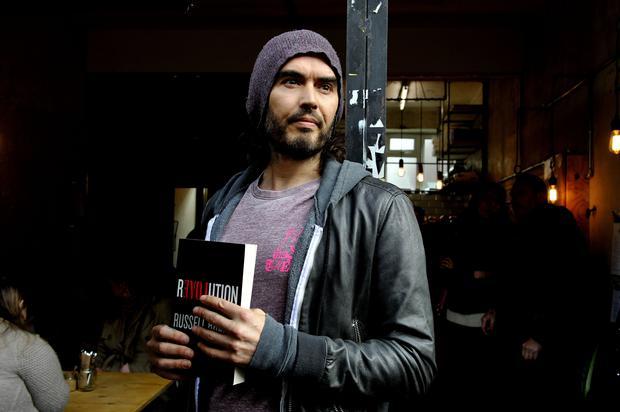
Extract from Russell’s new book ‘Revolution’
October 13, 2014

I suppose we must each ask of ourselves – or each other, have fun with it, it could be a quiz, two fundamental questions: 1) Are you happy with things the way they are? And 2) Do you believe that things could be better?

I know most people want change. I know most people can’t be happy with the current regime. In any electoral process worth having, we might assume that the 3.5 billion people who have as much wealth collectively as the 85 richest people in the world are up for some amendments an’ all. I just used the calculator on my phone to subtract 85 from 3.5 billion and the answer had a letter in it. Even the calculator has gone berserk at this injustice.

That aside, a significant number of people are not happy with the way things are. I’m not, and I’ve done all right out of this system: I’ve a big house, a nice cat, and when I write books, they’re immediately put on the school curriculum. So this system has not been bad to me. I’ve been given everything I wanted. The problem is, I didn’t really want it. That desire was put there. Who put it there? And why?

And why doesn’t it work? Do you remember when Haiti had that earthquake? You probably don’t, you self-centred swine, and if you do, I bet it’s because of the star-spangled telethon that came in its wake. The telethon is a near-permanent fixture in our culture, and in a way the perfect concoction for a society that wants to release hot little farts of compassion, but without wanting to ever actually follow through. I was invited by George Clooney to participate in this grotesquely beautiful effort to provide aid for the victims of the 2010 disaster, and was instantly told by someone at the agency that attendance was mandatory as it was a good career opportunity. Which I’m sure, as much as the rice and antibiotics, soothed the displaced Haitians. “I’m sorry you lost your house and leg and dog and daughter – here’s some medicine that was purchased in the most glamorous way imaginable, in a format that’s given some Hollywood newcomers a real chance to shine.” (Clooney obviously set up this event with the best of intentions, with incredible effort, using his visibility and luminance to draw attention to the vital need for humanitarian aid. Clearly no one would condemn him for this kindness. It is just unfortunate that when philanthropy meets the machinery of celebrity, it acquires such an unpleasing hue.)

The reason this event was spectacular in the crowded marketplace of televised benefits was because of the sheer density of stars. It was obscene. Like fame porn. As I nervously shuttled through security like a first-day intern into the CBS studios, I was so overwhelmed by the frequency of famous faces in an enclosed space that I almost exploded. What is this tenuous equation between fame and tragedy?

What celestial matchmaker has slung together these mismatched phenomena? Fame to treat famine, fame to treat poverty, fame to take the boredom away. An implausible coupling that advances the benefactor more than the beneficiary. Still, I went anyway; as I say, it was a good opportunity. I’m glad I went, too. It was like Madame Tussauds after a visit from a wizard. It appals me to confess that I don’t recall having any actual connection with the reality of the situation: that a natural disaster had sent a nation spiralling into chaos, disarray and tragedy. In my head, it was kind of like I was a last-minute replacement for the best man at George Clooney’s wedding and had to get to the venue on time at all costs. Which sounds a bit like the plot of a film he’d be in.

I’m not pointing the finger at anyone else, by the way; they may all have been there with the noblest intent. I’m prepared to accept sole responsibility for this hollowness and duplicity; perhaps it was just me who had no visceral, human connection to the suffering. Actually, though, isn’t that was these telethons are for? Not to actualise the disaster, to make it real, feel it, process it and resolve it, but to remove it, package it, give it a framework that is manageable somehow.

Yes, the tectonic plates are colliding and humanity is tumbling into the magma at the Earth’s core, but don’t worry, we’ve got Leonardo DiCaprio on line one. If you’re lucky, you get Leo or De Niro or Pacino or Daniel Day-Lewis or J-Lo or Brangelina. In one little sweep of my eye across a distance of about 12 yards, I was able to assemble the above constellation in some ghoulish, grafted menagerie of fame, the lot of them stacked up in phone banks like really well-groomed battery hens. Like an episode of Celebrity Squares held at Diana’s funeral. Too much. Just too much, and as William Blake has always said, the road of excess leads to the palace of wisdom. The wisdom reached by excess of this nature is that it’s all fucking bollocks, the celebrity equivalent of making a kid you catch smoking a fag do the whole packet. “So it’s fame you like, is it? Well, how about all the famous people in the world jammed into one, chilled, airless, glass box? Hahahahahahaha!”

Not everyone who called in by phone to pledge their donation was lucky enough to get George or Jack or Al. Some of ’em got me, and after about the third person had indignantly inquired, “Who?” and I had tired of explaining Sarah Marshall and Sachsgate, I just started saying, “Yeah, it’s Spiderman here, how can I help you?” hoping that Tobey Maguire couldn’t hear me.

I know George Clooney is probably a decent geezer an’ all that, and I’m no more condemning him for the vacuity of celebrity-driven humanitarianism than I am David Cameron for capitalism. I’m just saying, how long can you inhabit this sparkling candy palace without wanting to kick down the walls? If you’re not on the inside trying to get out, are you outside trying to get in? Or are you indifferent to the whole charade? Were you never taken in?

Under what circumstances is continuing to live like this the best option? Only if you have no belief that any alternative is possible. Only then. The celebrities feel better for taking part. The callers feel better for donating. The Haitians get a bit of aid they should rightly have been given under the covenant of brotherhood that exists between us all, and we all just smile and pretend there’s no alternative.

There is another way. There is the way. To live in accordance with truth, to accept we are on a planet that has resources and people on it. We have to respect the planet so we can use the resources to nourish the people. Somehow this simple equation has been allowed to become extremely confusing.

If I, so close to the peak, could glean no joy from that rarefied air, the air I was told, as soon as I’d acquired language, would absolve me, if in fact all I gleaned was the view from that peak, the vista true, that the whole climb had been a spellbound clamber up an edifice of foolishness, then what possible salvation can there be for those at the foothills or dying on the slopes or those for whom the climb is not even an option? What is their solution? Well, it’s the same solution that’s available to me, the only solution that will make any of us free. To detach the harness and fall within.

Now that’s what I call an extended metaphor. But none of us wants a boring solution. The Revolution cannot be boring.

There’s more to anarchy than not tidying your bedroom, spitting and having a mohican, David Graeber told me. In fact, it isn’t defiantly disorderly at all; it is society that has no centralised power. David came round my house in east London to talk to me about revolution. I knew immediately that I’d like him – he just had one of those faces.

David is best known for his idea of debt cancellation. Personal debt cancellation used to be a common policy in ancient civilisations; every seven years, all debt was cancelled. The Bible refers to “debt jubilees”, where everyone’s debt would be reset to zero. It’s especially nice that it was called a “jubilee”, creating an even more euphoric sense of carnival. In Islam, too, usury, credit at extortionate rates – like Wonga or whatever offer – is forbidden. So this bizarre-sounding notion has strong historic precedent. It is a mark of how far into materialism we have descended that it seems unfeasible in our world.

David explained that debt repayment has a powerful moral charge in our culture, that people feel ashamed about debt and guilty about non-payment. Seventy-five per cent of Americans are in debt, 40% owing more than $50,000, while an estimated nine million British people are in “serious debt”. What David Graeber, the anarchist, is suggesting is that all personal debt, debt for normal people, is cancelled. Think about it. That means you. All your debt cancelled.

When David said this, I felt excited, like it was naughty, like it shouldn’t be allowed. This is the feeling I still get when I start a car. “I shouldn’t be doing this,” I think, plunging down on the accelerator. The reality is, I shouldn’t be – I’m a terrible driver. My conditioning kicked in when David said that debt cancellation is a contemporary possibility. I nearly told him to shush and looked over my shoulder for a park keeper. Immediately, just by contemplating it, you feel like you’re bunking off school. “We can’t cancel debt – we’ll get the cane.”

I thought about the ramifications. Well, obviously, most people would be thrilled. Tuesday night you go to bed with a credit card bill, mortgage and a bloody headache; Wednesday you wake up with a spring in your step and a pound note in your pocket. What a touch. Obviously this is not such good news for credit card companies and banks; overnight, their entire operation has irrevocably altered. Most of these companies are international, too, so what would the impact be on global finances? I imagine a mainstream economist – and let me tell you off the bat, I’ve no fucking intention of asking one – would say this action would instigate financial meltdown.

What Graeber says in response to this is that $700bn was written off and trillions were lent to banks as the result of the 2008 financial crash. When the reckless and greedy trading, lending and gambling of the financial industry led to an economic breakdown that, if not resolved, would’ve provoked social upheaval, possibly Revolution, the governments of affected nations got together (in a smoky, dim-lit room?) and decided to press reset on the economy. Aside from a few people carrying plants out of their offices in cardboard boxes, I don’t remember there being many consequences at all. Just some people with plants looking confused by a revolving door.

Oh, and 13.1 million American people had their homes foreclosed. Because their debt, it turns out, was real; it was only the debt within the financial sector that was imaginary. It was only the people who generated the crisis who got three magical wishes from an economic genie. There was no abracadabra for ordinary people, they just got abraca-fucked.

So we are not discussing whether or not debt cancellation is a possibility; we know it is, we’ve seen it, they’ve done it. All we are discussing is whom it is possible for. Them or us.

I’ve just typed myself into a revolutionary fervour again. Every so often, the fury at injustice rises up in me and makes me want to smash something or burn something, but nothing in my immediate environment belongs to me, so I have to refrain.

Read full Article
Russell Brand: My life without drugs
March 8, 2013

The last time I thought about taking heroin was yesterday. I had received “an inconvenient truth” from a beautiful woman. It wasn’t about climate change – I’m not that ecologically switched on – she told me she was pregnant and it wasn’t mine.

I had to take immediate action. I put Morrissey on in my car as an external conduit for the surging melancholy, and as I wound my way through the neurotic Hollywood hills, the narrow lanes and tight bends were a material echo of the synaptic tangle where my thoughts stalled and jammed.

Morrissey, as ever, conducted a symphony, within and without and the tidal misery burgeoned. I am becoming possessed. The part of me that experienced the negative data, the self, is becoming overwhelmed, I can no longer see where I end and the pain begins. So now I have a choice.

I cannot accurately convey to you the efficiency of heroin in neutralising pain. It transforms a tight, white fist into a gentle, brown wave. From my first inhalation 15 years ago, it fumigated my private hell and lay me down in its hazy pastures and a bathroom floor in Hackney embraced me like a womb.

This shadow is darkly cast on the retina of my soul and whenever I am dislodged from comfort my focus falls there.

It is 10 years since I used drugs or drank alcohol and my life has improved immeasurably. I have a job, a house, a cat, good friendships and generally a bright outlook.

The price of this is constant vigilance because the disease of addiction is not rational. Recently for the purposes of a documentary on this subject I reviewed some footage of myself smoking heroin that my friend had shot as part of a typically exhibitionist attempt of mine to get clean.

I sit wasted and slumped with an unacceptable haircut against a wall in another Hackney flat (Hackney is starting to seem like part of the problem) inhaling fizzy, black snakes of smack off a scrap of crumpled foil. When I saw the tape a month or so ago, what is surprising is that my reaction is not one of gratitude for the positive changes I've experienced but envy at witnessing an earlier version of myself unencumbered by the burden of abstinence. I sat in a suite at the Savoy hotel, in privilege, resenting the woeful ratbag I once was, who, for all his problems, had drugs. That is obviously irrational.

The mentality and behaviour of drug addicts and alcoholics is wholly irrational until you understand that they are completely powerless over their addiction and unless they have structured help they have no hope.

This is the reason I have started a fund within Comic Relief, Give It Up. I want to raise awareness of, and money for, abstinence-based recovery. It was Kevin Cahill's idea, he is the bloke who runs Comic Relief. He called me when he read an article I wrote after Amy Winehouse died. Her death had a powerful impact on me I suppose because it was such an obvious shock, like watching someone for hours through a telescope, seeing them advance towards you, fist extended with the intention of punching you in the face. Even though I saw it coming, it still hurt when it eventually hit me.

What was so painful about Amy's death is that I know that there is something I could have done. I could have passed on to her the solution that was freely given to me. Don't pick up a drink or drug, one day at a time. It sounds so simple. It actually is simple but it isn't easy: it requires incredible support and fastidious structuring. Not to mention that the whole infrastructure of abstinence based recovery is shrouded in necessary secrecy. There are support fellowships that are easy to find and open to anyone who needs them but they eschew promotion of any kind in order to preserve the purity of their purpose, which is for people with alcoholism and addiction to help one another stay clean and sober.

Without these fellowships I would take drugs. Because, even now, the condition persists. Drugs and alcohol are not my problem, reality is my problem, drugs and alcohol are my solution.

If this seems odd to you it is because you are not an alcoholic or a drug addict. You are likely one of the 90% of people who can drink and use drugs safely. I have friends who can smoke weed, swill gin, even do crack and then merrily get on with their lives. For me, this is not an option. I will relinquish all else to ride that buzz to oblivion. Even if it began as a timid glass of chardonnay on a ponce's yacht, it would end with me necking the bottle, swimming to shore and sprinting to Bethnal Green in search of a crack house. I look to drugs and booze to fill up a hole in me; unchecked, the call of the wild is too strong. I still survey streets for signs of the subterranean escapes that used to provide my sanctuary. I still eye the shuffling subclass of junkies and dealers, invisibly gliding between doorways through the gutters. I see that dereliction can survive in opulence; the abundantly wealthy with destitution in their stare.

Spurred by Amy's death, I've tried to salvage unwilling victims from the mayhem of the internal storm and I am always, always, just pulled inside myself. I have a friend so beautiful, so haunted by talent that you can barely look away from her, whose smile is such a treasure that I have often squandered my sanity for a moment in its glow. Her story is so galling that no one would condemn her for her dependency on illegal anesthesia, but now, even though her life is trying to turn around despite her, even though she has genuine opportunities for a new start, the gutter will not release its prey. The gutter is within. It is frustrating to watch. It is frustrating to love someone with this disease.

A friend of mine's brother cannot stop drinking. He gets a few months of sobriety and his inner beauty, with the obstacles of his horrible drunken behaviour pushed aside by the presence of a programme, begins to radiate. His family bask relieved, in the joy of their returned loved one, his life gathers momentum but then he somehow forgets the price of this freedom, returns to his old way of thinking, picks up a drink and Mr Hyde is back in the saddle. Once more his brother's face is gaunt and hopeless. His family blame themselves and wonder what they could have done differently, racking their minds for a perfect sentiment; wrapped up in the perfect sentence, a magic bullet to sear right through the toxic fortress that has incarcerated the person they love and restore them to sanity. The fact is, though, that they can't, the sufferer must, of course, be a willing participant in their own recovery. They must not pick up a drink or drug, one day at a time. Just don't pick up, that's all.

It is difficult to feel sympathy for these people. It is difficult to regard some bawdy drunk and see them as sick and powerless. It is difficult to suffer the selfishness of a drug addict who will lie to you and steal from you and forgive them and offer them help. Can there be any other disease that renders its victims so unappealing? Would Great Ormond Street be so attractive a cause if its beds were riddled with obnoxious little criminals that had "brought it on themselves"?

Peter Hitchens is a vocal adversary of mine on this matter. He sees this condition as a matter of choice and the culprits as criminals who should go to prison. I know how he feels. I bet I have to deal with a lot more drug addicts than he does, let's face it. I share my brain with one, and I can tell you firsthand, they are total fucking wankers. Where I differ from Peter is in my belief that if you regard alcoholics and drug addicts not as bad people but as sick people then we can help them to get better. By we, I mean other people who have the same problem but have found a way to live drug-and-alcohol-free lives. Guided by principles and traditions a programme has been founded that has worked miracles in millions of lives. Not just the alcoholics and addicts themselves but their families, their friends and of course society as a whole.

What we want to do with Give It Up is popularise a compassionate perception of drunks and addicts, and provide funding for places at treatment centres where they can get clean using these principles. Then, once they are drug-and-alcohol-free, to make sure they retain contact with the support that is available to keep them clean. I know that as you read this you either identify with it yourself or are reminded of someone who you love who cannot exercise control over substances. I want you to know that the help that was available to me, the help upon which my recovery still depends is available.

I wound down the hill in an alien land, Morrissey chanted lonely mantras, the pain quickly accumulated incalculably, and I began to weave the familiar tapestry that tells an old, old story. I think of places I could score. Off Santa Monica there's a homeless man who I know uses gear. I could find him, buy him a bag if he takes me to score.

I leave him on the corner, a couple of rocks, a couple of $20 bags pressed into my sweaty palm. I get home, I pull out the foil, neatly torn. I break the bottom off a Martell miniature. I have cigarettes, using makes me need fags. I make a pipe for the rocks with the bottle. I lay a strip of foil on the counter to chase the brown. I pause to reflect and regret that I don't know how to fix, only smoke, feeling inferior even in the manner of my using. I see the foil scorch. I hear the crackle from which crack gets it's name. I feel the plastic fog hit the back of my yawning throat. Eyes up. Back relaxing, the bottle drops and the greedy bliss eats my pain. There is no girl, there is no tomorrow, there is nothing but the bilious kiss of the greedy bliss.

Even as I spin this beautifully dreaded web, I am reaching for my phone. I call someone: not a doctor or a sage, not a mystic or a physician, just a bloke like me, another alcoholic, who I know knows how I feel. The phone rings and I half hope he'll just let it ring out. It's 4am in London. He's asleep, he can't hear the phone, he won't pick up. I indicate left, heading to Santa Monica. The ringing stops, then the dry mouthed nocturnal mumble: "Hello. You all right mate?"

He picks up.

And for another day, thank God, I don't have to.

Read full Article
See More
Available on mobile and TV devices
google store google store app store app store
google store google store app tv store app tv store amazon store amazon store roku store roku store
Powered by Locals